













Complete Guide to Kubota Equipment Maintenance | Tips from Our Experts at Kubota Max Gagné
Summary
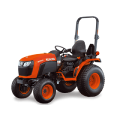
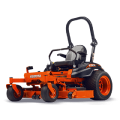
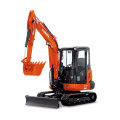
Whether you own a Kubota compact tractor, commercial mower, or excavator, proper maintenance is the best way to ensure your equipment remains reliable for many years to come.
In this comprehensive guide, René, who has been working at Kubota Max Gagné for 25 years (and the last 2 years as Service Manager), shares the advice he applies every day with thousands of customers.
In summary
- Why Preventive Maintenance Is So Important
- The Most Costly Mistakes
- Checks You Can Do Yourself
- Why Choose Genuine Kubota Parts
- How to Prepare Your Equipment for Each Season
- The Benefits of the Kubota Max Gagné Service
Your Kubota Is Built To Last… As Long As You Maintain It properly
For more than 50 years, Kubota has been known for manufacturing sturdy and reliable equipment. In fact, it’s not uncommon to see Kubota tractors still in service after several decades.
But even the best machine can’t make up for a lack of maintenance.
At Kubota Max Gagné and Kubota Montreal, our teams see repairs every year that could have been avoided with simple preventive maintenance.
To help you protect your investment, we spoke with René, director of the service department at Kubota Max Gagné.
With 25 years of experience, he works daily with owners of agricultural, municipal, commercial, and residential equipment.
« Our work isn’t just about repairing machines. Above all, our goal is to help our customers prevent breakdowns through proper monitoring and maintenance tailored to their specific needs. »
Why Is Preventive Maintenance So Important?
For René, the answer is simple. The vast majority of significant repairs start with a minor problem that could have been detected much earlier:
- A worn belt;
- A clogged filter;
- A hydraulic leak;
- Contaminated oil;
- An old fuel.
If addressed promptly, these problems are inexpensive to fix.
If left unchecked for several weeks or months, they can completely shut down a machine at the worst possible time of the season.
And often, the repair isn’t what costs the most.
That’s time wasted.
For an excavation contractor, a landscaper, or a farmer, a day of downtime can quickly lead to delays, additional costs, and sometimes even the loss of a contract.
The Biggest Mistake Kubota Owners Make
If he had to choose just one mistake, René answers without hesitation:
« Lack of maintenance. This is by far the most common issue. »

René
Many owners wait until a problem arises before calling a technician.
However, regular maintenance often makes it possible to detect a part that is nearing the end of its service life before it causes a much more serious breakdown.
Each Piece Of Equipment Has Its Own Maintenance Schedule
Unlike a car, there is no single maintenance schedule that applies to all Kubota equipment.
Some machines require their first maintenance after just 50 hours, while others follow a 200-hour schedule.
Certain tasks must also be performed once a year, even if they require only a few hours.
That is why Kubota Max Gagné technicians always follow the recommendations specific to each model.
The hour meter remains your best indicator.
Checks You Can Do Yourself
Even though many inspections are performed at dealerships, a few simple checks can help prevent many problems.
Before each use, take a few minutes to:
- check the engine oil level;
- perform a visual inspection of the machine;
- check for leaks;
- check the hour meter;
- check the tires or tracks;
- listen for any unusual noises.
As René points out:
« As soon as you notice something unusual, it’s best to seek advice. »
Why We Always Recommend Genuine Kubota Parts
This is probably the issue on which René is most forthright.
Yes, buying multiple filters or compatible parts may be cheaper, but this savings is often misleading.
Kubota technicians compared various filters by taking them apart: the quality of the materials and the filtration capacity are not the same.
In some cases, even a simple, lower-quality hydraulic filter can cause hesitation in the transmission and operational problems.
Using genuine parts helps maintain your equipment’s performance and reduces the risk of costly repairs in the long run.
The Most Common Mistakes We See In The Workshop
Some problems keep coming up year after year.
The most common ones are:
- fuel that has become too old;
- contamination of the tank by leaves or debris;
- water in diesel fuel;
- gasoline-diesel blend;
- maintenance that has been put off for too long.
Some situations may seem insignificant.
A single leaf or a few pine needles that have fallen into a fuel tank can eventually completely block the fuel supply.
The repair therefore requires completely disassembling the tank to clean it.
An intervention that could have been avoided.
Tailoring Your Maintenance to the Seasons
Each season brings its own challenges.
Spring
Before first use:
- replace the old fuel;
- check the oil levels;
- visually inspect the equipment;
- Perform the scheduled maintenance.
Summer
During periods of heavy use:
- Follow the maintenance schedule;
- Watch for unusual noises;
- Clean the machine regularly.
Fall
This is the time of year when René sees the most problems.
The switch from summer diesel to winter diesel is often overlooked.
When temperatures drop rapidly, the wrong type of fuel can thicken and prevent the machine from operating properly.
Winter
For stored equipment:
- Add a fuel stabilizer;
- Use a smart battery charger;
- Start the engine occasionally on milder days.
Technicians Trained Directly By Kubota
Maintenance of Kubota equipment is constantly evolving.
That is why every technician completes a Kubota training program each year.
In addition to online training, several technicians also participate in specialized training courses offered by Kubota Canada.
This continuing education program enables our team to master the latest generations of engines, hydraulic systems, and onboard technologies.
Mobile Service: The Workshop That Comes to You
In many cases, you don’t need to move your equipment.
Thanks to our mobile unit, we can perform a variety of services directly at the customer’s location:
- preventive maintenance;
- replacement of hydraulic hoses;
- inspections;
- minor repairs.
This way, you reduce downtime and avoid having to transport your machine.
When Should You Contact A Technician?
Never wait until a problem becomes serious.
Make an appointment as soon as you notice:
- an unusual noise;
- a leak;
- a loss of power;
- abnormal behavior;
- an unusual warning light;
- an overdue maintenance check.
Taking action early on is almost always less expensive than a major repair.
FAQ
How often should a Kubota be serviced?
It depends on the model and the number of hours of use. Some machines require maintenance after 50 hours, others after 200 hours, in addition to the recommended annual maintenance.
Can I do the maintenance myself?
Yes, a variety of operations are possible as long as you follow the manufacturer’s recommendations. However, the use of genuine Kubota parts and filters is strongly recommended.
Why use genuine Kubota parts?
Because they are designed specifically for your equipment and offer a higher level of quality and filtration than compatible parts.
When is the best time to do the maintenance?
Before the start of the season or immediately after a period of intensive use.
What should I do if my machine isn’t used for several months?
Use a fuel stabilizer, maintain the battery with a smart charger, and perform a thorough inspection before putting the vehicle back into service.
Follow us and stay connected!
Facebook : https://www.facebook.com/KubotaMaxGagne/
Instagram : https://www.instagram.com/kubotamaxgagne/
Kubota Max Gagné
For several decades, Kubota Max Gagné supports farmers, business owners, municipalities, and homeowners with Kubota equipment renowned for its quality. Our team offers personalized consulting services, an extensive inventory of genuine parts, a specialized workshop, and award-winning after-sales service to help you get the most out of your investment.